Skylark - Paula McClain
Genre: Historical Fiction
Paula McClain’s Skylark is a compelling and complex historical novel. In it she explores Paris, France in 1644 and France in 1939. Alouette is a woman in 1644 France who has learned the art of creating dye from her father. As a woman, she is not permitted such knowledge and is sentenced to an asylum for hysteria. While her lover Etienne waits for her outside, she is bled, abused, and must defend herself while demonstrating “improvement.” Kristoff is working in psychiatric care in a Paris hospital in 1939 when the Germans take over the city that has been abandoned by its government. He becomes involved with the resistance as he struggles with the treatment of both his mentally ill patients and his Jewish neighbors. Sasha’s family is ripped from their home by the Nazis, and she must figure out how to move forward.
McClain’s research is detailed and flawless. She develops the setting - geographically, culturally, and historically in both 1644 and 1939. As different as these time periods are - mining and dye, guilds and corruption in 1644; war, antisemitism, racism, and corruption in 1939 - the similarities are what McClain highlights. People are trapped in a world ruled by corrupt leaders. While they can find some measure of joy in their work, families, music, nature, the world surrounding them seems determined to destroy them. In this environment Alouette, Ettienne, Kristoff, and Sasha demonstrate strength and resilience that to me are stunning. These strong individuals - all very different - share a passion for justice and freedom that can find hope in the darkest of tunnels. The tunnels are a motif throughout. The markings in them beautifully illustrate the human need to record and to be seen. Ultimately they become an escape route in 1939 - in part, because of the people who came before. McClain also captures the human need to create - color, music and explores how these pursuits can sustain people. Finally, she touches carefully and thoughtfully on mental health - and the horror that accompanies its treatment in both of these eras. Her portrayal feels to me like a call to do better.
I have loved each and every one of Paula McClain’s books. She broke my heart just a little in this one. Hers are not easy reads - the content is challenging - but so important. I am stunned at the lack of change from 1644 to 1939. Many will find it easy to draw parallels to 2026. The people are strong, but evil can prevail so easily, for longer than believable. Authors who research, study, and create narratives like Skylark are essential to maintaining hope for change.
For a nice discussion of this book, tune into Adriana Trigiani’s podcast “You are What you Read,” originally dropped December 30, 2025. Trigiana interviews McClain, and the insights are fascinating.
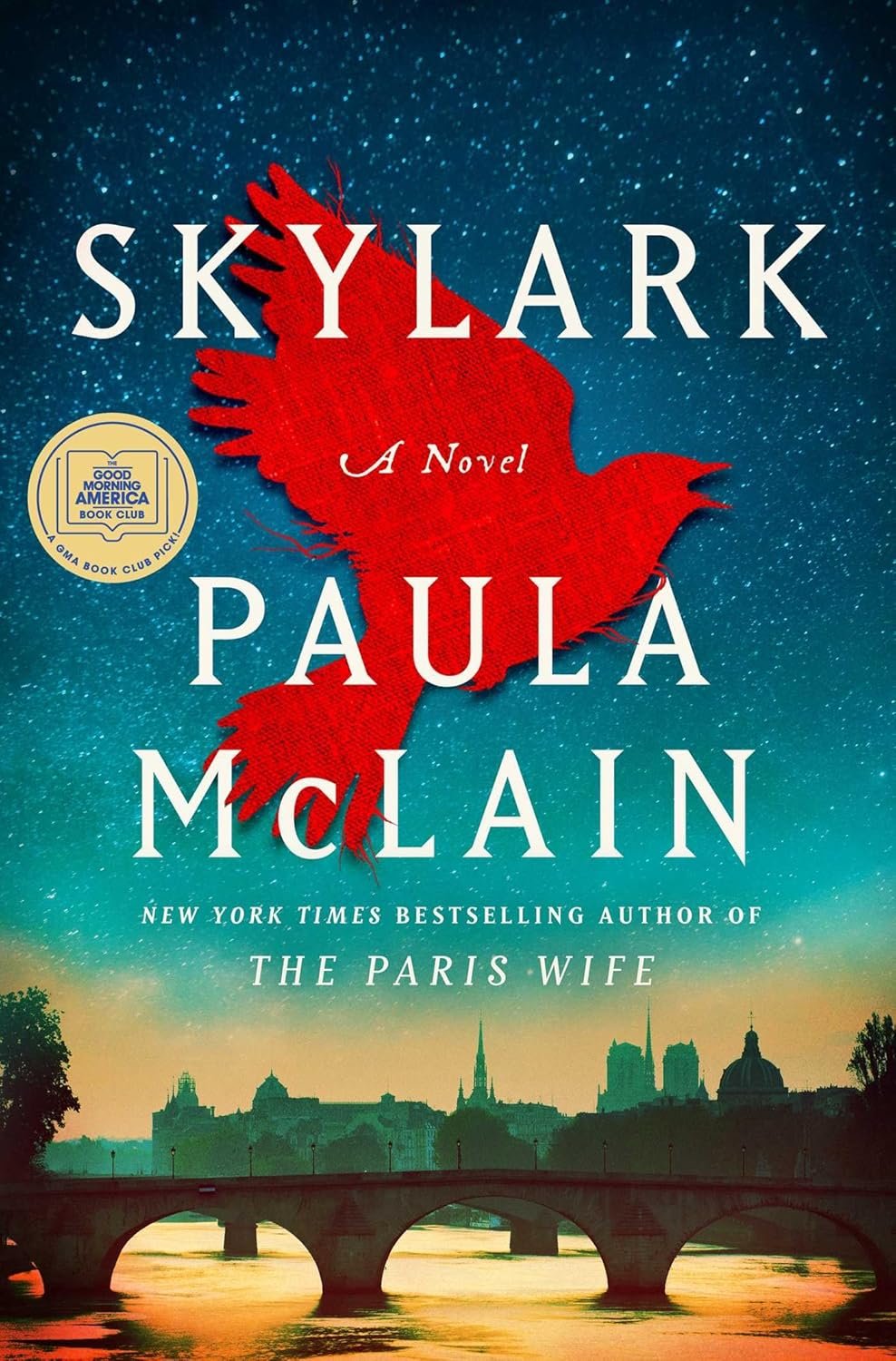
Book Cover of Skylark by Paula McClain